
Losing the Plot: Analyzing Skill Atrophy and Institutional Knowledge Drain in AI-Accelerated Security Operations
Executive Summary
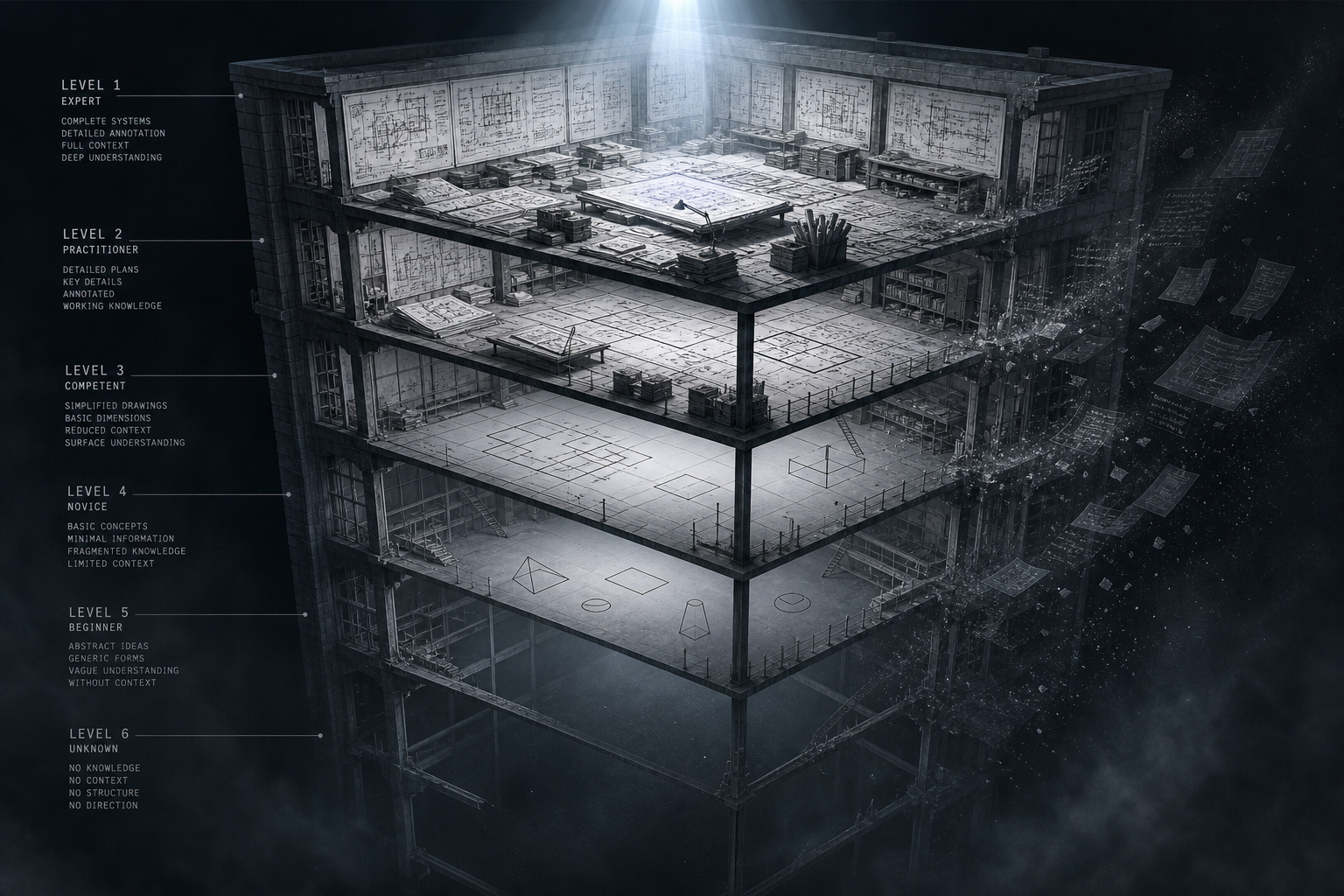
As artificial intelligence systems increasingly automate tactical decision-making in cybersecurity operations, organizations face a critical but underrecognized risk: the erosion of human expertise and institutional knowledge among security personnel. Research across workforce adaptation, automation theory, and organizational learning indicates that security analysts operating within AI-dependent workflows experience measurable degradation in judgment acuity, threat pattern recognition, and independent decision capability within 18–36 months of deployment.
This degradation creates asymmetric operational vulnerability—organizations become dependent on system performance precisely when novel threats, system failures, or adversarial adaptation demand human expertise most. The article examines the mechanisms of skill atrophy in security contexts, identifies early warning signals, and presents a tiered intervention framework for preserving analyst expertise while leveraging AI's augmentative potential. Organizations deploying AI automation without deliberate knowledge preservation protocols face compounding resilience risk.
Key Finding: Organizations deploying AI-driven security automation without deliberate knowledge preservation and skills development protocols experience measurable degradation in analyst judgment, incident response decision quality, and institutional memory within 18–36 months—creating asymmetric risk exposure where system dependencies compound during high-complexity or novel threat scenarios.
What Happened
The deployment of artificial intelligence in cybersecurity operations centers represents a fundamental shift in how security work is organized and executed. Alert triage, incident correlation, threat classification, and initial response recommendations increasingly flow through machine learning systems rather than human analysts. This automation is not speculative; organizations across financial services, healthcare, critical infrastructure, and technology sectors have implemented AI-driven security orchestration platforms over the past 18–24 months, with adoption accelerating through 2025 and into 2026.
The operational benefits driving this adoption are substantial and measurable: AI systems reduce false-positive noise, accelerate alert processing, and improve consistency in routine threat classification. However, research in automation-induced skill degradation, organizational learning, and workforce dynamics reveals that these operational benefits carry structural costs that manifest systematically over time.
The foundational theory underpinning skill atrophy in automated systems dates to control theory research in aviation beginning in the 1980s, which documented measurable degradation in pilot decision-making as autopilot systems assumed greater flight control responsibility. Pilots exposed to extended periods of automated flight management demonstrated reduced pattern recognition capability, slower decision latency when manual control became necessary, and degraded judgment in novel or emergency scenarios.
In cybersecurity operations centers, the same mechanism operates at both individual and institutional levels. At the individual level, security analysts whose primary workflow involves validating AI-generated incident correlations experience reduced exposure to raw threat indicators, anomalous network behavior, and the complex pattern-matching required to identify threats absent automated correlation support. Over repeated exposure cycles, the neural pathways supporting rapid threat pattern recognition atrophy.
At the institutional level, organizations experience knowledge drain through multiple pathways. Explicit knowledge—documented procedures, threat classification schemas, incident response frameworks—becomes embedded in AI training data and system logic rather than maintained independently in organizational repositories. When this knowledge exists only as black-box system behavior rather than documented expert reasoning, the organization loses the ability to audit, validate, or explain security decisions.
The timeline of skill atrophy follows a distinct pattern. Phase one (0–6 months post-deployment) shows minimal observable degradation; organizations experience operational improvement without apparent capability loss. Phase two (6–18 months) marks the emergence of measurable task-scope reduction; analysts handle fewer complex incidents requiring independent judgment. Phase three (18–36 months) produces visible judgment degradation in non-routine scenarios. Phase four (36+ months) reflects institutional knowledge concentration in system logic; the organization has no independent human decision capability at previous scope and complexity.
Critically, organizations do not typically recognize this degradation as it occurs. The automation that reduces skill simultaneously reduces the frequency of incidents requiring independent expert judgment—the visible metric by which skill loss would be detected. An organization reports improved efficiency and reduced false positives while remaining unaware that its workforce has become operationally brittle, dependent on system performance, and incapable of rapid recovery should that system fail, be compromised, or encounter threats beyond its training distribution.
Why It Matters
Security Operations Leadership
The primary institutional risk is operational brittleness. Organizations with degraded analyst capability cannot manage incidents at previous scale during system failure, malfunction, or adversarial compromise. A sophisticated threat actor could exploit or disable an AI-dependent SOC's automation infrastructure, forcing the organization to respond with a workforce lacking independent decision capability. The organization would face extended incident dwell time, delayed threat detection, and escalated damage precisely when rapid expert response is most critical. Regulatory and audit exposure compounds this risk. Cybersecurity regulations, compliance frameworks (including SEC disclosure requirements for material breaches), and corporate governance standards increasingly require documented expert judgment in incident classification, threat assessment, and response prioritization.
Human Resources and Workforce Strategy
Career-stage security analysts face skill obsolescence and compressed advancement opportunity. In an AI-managed environment, analyst progression typically follows a path from alert triage toward system management rather than from alert response toward complex incident analysis and strategic decision-making. This compressed pathway reduces perceived career opportunity, limiting advancement for mid-career professionals. Research from workforce adaptation studies indicates that mid-career workers experiencing role compression and perceived reduced value show elevated attrition rates, particularly among high-performing individuals with external employment alternatives. The mechanism is straightforward: experienced analysts perceive that institutional expertise is devalued when automation assumes decision-making authority.
Board and Executive Leadership
Skill atrophy creates specific vulnerability to adversarial adaptation. Threat actors continuously evolve tactics, techniques, and procedures beyond the training distributions on which AI systems are built. During this window—when threats are novel to the AI system—organizations depend on human analyst judgment to recognize emerging attack patterns. Analysts with preserved expertise can identify novel behaviors contextually; analysts with degraded pattern recognition cannot. This dynamic creates adversarial asymmetry. The threat landscape evolves faster than AI systems can retrain. Organizations with preserved analyst expertise maintain a competency buffer—human judgment fills the gap between training data and emerging threats.
Chief Information Security Officer
Institutional learning mechanisms depend on expert analysis. Post-incident reviews, root-cause analysis, and emerging threat assessments require practitioners capable of complex reasoning, contextual judgment, and synthesis across incomplete information. When these capabilities degrade, organizations lose the ability to learn from incidents, adapt threat strategies, and develop improved defensive approaches. Additionally, automation encodes and replicates systematic bias. AI systems encode patterns from their training data, including biases, errors, and blind spots present in historical incident data. Experienced analysts, through contextual judgment, identify and correct these biases. Analysts dependent on system recommendations lack the independent judgment to recognize systematic error.
Operational Implications
Immediate (0–6 Months Post-Deployment): Organizations should establish baseline metrics measuring analyst capability independent of AI system performance. These include decision quality metrics such as false-positive validation accuracy, time-to-independent-decision for non-routine incidents, and incident classification accuracy for novel threat scenarios. Institutional knowledge indicators should track documentation update frequency, mentoring hours per senior analyst, and senior analyst departure rate measured quarterly. System dependency metrics should monitor the percentage of incidents closed with only AI recommendations, analyst override frequency, and manual analysis initiation frequency.
Short-Term (6–18 Months): Organizations should implement monitoring for behavioral and organizational signals preceding measurable skill degradation. Early warning signals include elevated analyst frustration regarding role constraint or reduced complexity, difficulty onboarding new analysts to manual analysis workflows, reduced incident case study complexity in post-mortems, knowledge documentation responsibilities falling entirely to junior personnel, and declining perceived organizational value of senior analysts. Organizations should establish risk thresholds triggering intervention. A critical operational threshold occurs when more than 60% of incidents are resolved without human expert judgment. High-risk organizational factors include more than 40% attrition among mid-career and senior analysts within 24 months of AI deployment.
Medium-Term (18–36 Months): Organizations should assess and document their operational dependency on AI systems, including percentage of SOC functions dependent on specific AI tools, alternative procedures available should AI systems fail, and decision-making authority structures during system unavailability. Organizations should conduct scenario exercises testing incident response capability with AI systems offline; results typically reveal concerning capability gaps. Organizations should establish clear protocols for human override of system recommendations and ensure these protocols are actively used rather than theoretical. Strategic workforce planning becomes critical as attrition risk peaks; organizations should prepare succession planning and knowledge transfer roadmaps before senior analyst attrition occurs.
Long-Term (36+ Months): Organizations with mature AI deployments should establish institutional structures sustaining expertise and resilience long-term. This includes establishing a dedicated decision science research function responsible for ongoing analysis of incident decision-making, judgment quality, and system performance. Organizations should create senior expert analyst roles with institutional authority independent from operational chain of command. Establish regular semi-annual formal assessment of analyst judgment quality independent of system performance, measuring novel threat recognition capability, manual analysis acuity, and decision confidence in scenarios where system recommendations are unavailable. Participate in industry working groups and threat intelligence consortiums to share institutional learning regarding skill preservation and decision-making integrity.
Recommended Actions
Actions are organized by organizational security maturity. Baseline controls apply across all tiers and should be treated as immediate priorities regardless of organizational size.
* Organizations in planning or early implementation phases should establish foundational structures before skill degradation accelerates.
- 1 - Create explicit knowledge repository independent from AI system logic, including documented threat frameworks, incident classification schemas, decision procedures, and threat context libraries with senior leader ownership
- 2 - Define analyst career pathways emphasizing judgment expertise and complex analysis rather than system administration; ensure analysts maintain 1–2 shifts weekly exposure to unfiltered alert queues and manual correlation work
- 3 - Establish explainability requirements for AI system recommendations requiring human-interpretable decision rationale; ensure human analysts independently validate system logic against documented decision frameworks
- 4 - Establish clear human-override protocols and ensure these are actively used with all overrides documented and reviewed; ensure mentoring requirement structures with senior analysts dedicating time to junior analyst development
- 5 - Conduct executive messaging framing AI as augmentation of analyst expertise, not replacement; communicate that career advancement depends on developing judgment and expertise; conduct board briefing articulating strategy for preserving human expertise and institutional resilience
* Organizations already operating with AI-dependent workflows should implement corrective interventions addressing skill preservation and knowledge retention.
- 1 - Establish knowledge documentation mandate with specific deliverables including explicit decision reasoning in incident post-mortems; create knowledge repository with team-wide accessibility and regular curation; implement expertise mapping identifying single-person knowledge dependencies
- 2 - Establish mandatory human-only incident analysis rotations ensuring weekly exposure to manual threat analysis; implement monthly scenario-based decision exercises using non-routine, novel threat scenarios to sustain judgment acuity
- 3 - Conduct baseline assessment of AI system performance vs. human-independent analysis establishing human expert judgment as performance baseline; create quarterly review of AI system decision quality; establish process for identifying system blind spots through analyst override analysis
- 4 - Develop retention strategy for mid-career and senior analysts emphasizing advancement through expertise development; create advanced analysis training program covering threat landscape evolution, decision analysis, novel threat recognition, and system evaluation
- 5 - Establish formal expertise recognition program including certifications, leadership roles, and external visibility; implement succession planning for senior analysts at risk of departure
* Organizations with mature AI deployments should establish institutional structures sustaining expertise and resilience long-term.
- 1 - Establish dedicated decision science research function responsible for ongoing analysis of incident decision-making, judgment quality, and system performance with authority to challenge system recommendations and influence AI system governance
- 2 - Create senior expert analyst role with institutional authority independent from operational chain of command, with authority to override system recommendations, initiate investigations, and develop threat strategy
- 3 - Establish regular semi-annual formal assessment of analyst judgment quality independent of system performance measuring novel threat recognition capability, manual analysis acuity, and decision confidence in scenarios where system recommendations are unavailable or contradictory
- 4 - Participate in industry working groups, threat intelligence consortiums, and analyst education initiatives; share institutional learning regarding skill preservation and decision-making integrity with peer organizations
- 5 - Conduct scenario exercises testing incident response capability with complete AI system failure or compromise; test both infrastructure failover and decision-making capability under manual-only operations; use results to identify capability gaps and design organizational structures supporting manual operations
Closing Statement
The integration of artificial intelligence into cybersecurity operations represents genuine operational progress—improved alert processing, reduced false positives, and enhanced decision consistency deliver tangible efficiency benefits. However, organizations that pursue these benefits without deliberate strategy to preserve human expertise trade short-term optimization for long-term institutional brittleness.
Skill atrophy is not inevitable; it results from specific organizational choices regarding how analyst roles are structured, how knowledge is preserved, and how expertise is valued. Organizations that maintain deliberate separation between analytical judgment and system recommendation, that invest in mentor-led knowledge transfer, that recognize and advance expertise over system administration, and that regularly test human decision capability preserve resilience precisely when that resilience is most critical.
The cybersecurity landscape will continue to evolve faster than AI systems can adapt; human expertise is not obsolete in an AI-driven environment—it becomes more essential. Institutional resilience depends on maintaining that expertise deliberately and purposefully even as automation deepens.