LabubaRAT: Rust-Based RAT Exploits NVIDIA Brand Trust for Persistent Windows Compromise
Executive Summary
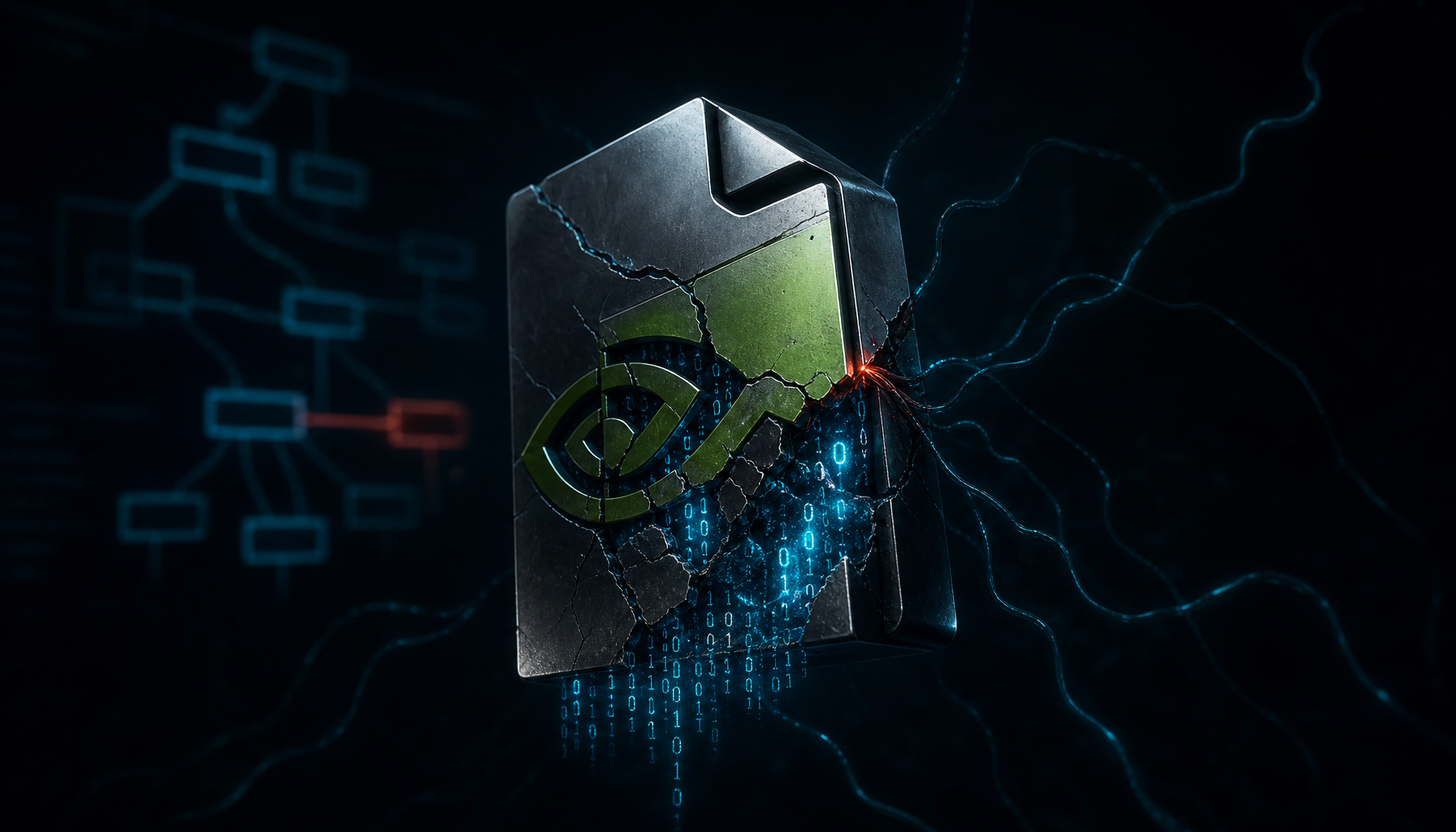
A newly identified remote access trojan designated LabubaRAT is actively targeting Windows environments by impersonating legitimate NVIDIA system software. Discovered and analyzed by researchers at Blackpoint Cyber, the malware presents itself as `nvidia-sysruntime.exe` — a filename sufficiently plausible across any environment running NVIDIA GPU hardware that users, administrators, and endpoint security tooling may extend it implicit trust. Constructed in the Rust programming language, LabubaRAT is engineered to resist static analysis, complicate signature-based detection, and establish durable persistence behind a surface appearance of legitimacy.
The campaign exploits a structural condition present across enterprise, AI/ML, creative, and industrial environments: the widespread normalization of NVIDIA-branded processes on Windows hosts. Once executed, the trojan provides adversaries with full remote access capabilities, including command execution, data exfiltration pathways, and lateral movement potential. No vendor-issued patch or platform-level mitigation exists at time of publication; effective defense is behavioral and policy-dependent.
Immediate actionable guidance: Organizations should immediately audit all endpoints for instances of `nvidia-sysruntime.exe` executing outside verified NVIDIA installation directories and enforce publisher certificate validation as a prerequisite for execution of any NVIDIA-branded binary.
Key Finding: LabubaRAT masquerades as a legitimate NVIDIA system runtime executable (`nvidia-sysruntime.exe`), using Rust-based obfuscation and trusted-brand impersonation to evade detection, establish persistence, and deliver full remote access capabilities on compromised Windows hosts — a technique that renders conventional filename-based and signature-based defenses operationally insufficient.
What Happened
Security researchers at Blackpoint Cyber identified and analyzed LabubaRAT as a novel remote access trojan constructed in the Rust programming language and distributed under the filename `nvidia-sysruntime.exe`. Initial technical analysis was published in July 2026, with subsequent community intelligence and detection guidance circulated across security forums and professional cybersecurity outlets, confirming active detection activity at time of publication.
The malware's choice of masquerade identity is operationally deliberate. NVIDIA is among the most widely deployed hardware vendors in enterprise computing, with GPU installations spanning corporate workstations, AI and machine learning pipeline infrastructure, scientific computing environments, creative production facilities, and consumer-adjacent gaming systems. Across these contexts, processes referencing NVIDIA runtime components are a normalized feature of the operating environment. The filename `nvidia-sysruntime.exe` is sufficiently consistent with legitimate NVIDIA software naming conventions — including those associated with NVIDIA's container runtime, system management interface, and GPU driver support services — that both human operators and automated security tooling may extend it an initial presumption of legitimacy without further scrutiny.
LabubaRAT's technical construction reflects deliberate investment in detection resistance. Rust, a memory-safe systems programming language originally developed for high-performance application development, has seen documented adoption by threat actor communities over the past several years. Rust-compiled binaries generate fewer identifiable code patterns than C or C++ counterparts, resist many standard decompilation workflows due to their compiled structure, and produce comparatively limited runtime memory artifacts that behavioral detection engines commonly rely upon for heuristic flagging. The practical result is that LabubaRAT presents a substantially reduced detection surface to security tooling whose rulesets were developed against more conventional malware construction paradigms.
Upon execution — most likely achieved through user or administrator initiation of a trojanized installer, a fraudulent NVIDIA driver download page, a phishing-linked download, or a third-party software bundle containing the spoofed executable — LabubaRAT initiates persistence mechanisms and establishes communications with attacker-controlled command-and-control infrastructure. Its classification as a full-featured remote access trojan indicates that adversaries receive interactive, session-based control of compromised hosts rather than a single-purpose payload. Capabilities consistent with RAT-class malware of this profile include remote command execution, file system access, credential harvesting pathways, network reconnaissance, and staging of additional payloads for subsequent campaign phases.
Why It Matters
For Security Practitioners and SOC Analysts
LabubaRAT directly challenges the operational assumptions embedded in many current endpoint detection architectures. Process name monitoring, filename-based alerting, and signature scanning — mainstays of endpoint defense across a wide range of organizations — are individually insufficient against a threat specifically engineered to defeat each in isolation. Effective detection requires that path validation, publisher certificate verification, hash comparison against known-good NVIDIA binaries, and parent process analysis function as combined, simultaneous controls rather than sequential fallbacks. SOC teams operating under sustained alert volume are particularly exposed to the malware's legitimacy mimicry. An entry for `nvidia-sysruntime.exe` in a process list generates substantially less cognitive friction than an obviously anomalous executable name. The evasion model operationalizes analyst assumption and investigator fatigue as attack surfaces alongside its technical detection gaps — a compounding characteristic that warrants explicit acknowledgment in detection engineering and SOC workflow design.
For Security Leaders and CISOs
The broader strategic implication is structural. LabubaRAT does not represent an isolated campaign so much as a demonstrated exploitation of brand trust asymmetry at institutional scale. Enterprise environments that normalize the presence of NVIDIA software — a category that has expanded considerably with the growth of GPU-accelerated AI workloads — have implicitly extended a trust surface that this campaign has now weaponized. Security leaders should assess whether current application control frameworks are predicated on name matching, publisher validation, or behavioral baselines, and whether those frameworks adequately account for trusted-brand impersonation as a systematic delivery mechanism rather than an incidental edge case. The campaign also warrants review of security awareness program scope. Most organizational training addresses phishing and credential risk; software acquisition hygiene for hardware-associated utilities represents a documented gap that LabubaRAT specifically exploits.
For Policy-Aware Executives and Procurement Leadership
The trojan's probable delivery through fraudulent download sites and trojanized software bundles identifies a concrete risk surface created by informal or unverified software acquisition practices. Organizations that permit end users or departmental teams to source NVIDIA drivers, utilities, or runtime libraries outside centrally managed distribution — whether through search engine results, third-party download aggregators, or unsolicited update prompts — have expanded their attack surface beyond what network and endpoint controls alone can reliably contain. This campaign reinforces the operational necessity of enforced software acquisition policy as a security control, not merely an IT governance preference.
Operational Implications
Immediate (Days to Weeks): The most pressing operational requirement is endpoint visibility. Organizations cannot make informed containment decisions without first establishing whether `nvidia-sysruntime.exe` is present in their environment and, if so, whether its execution context is consistent with legitimate NVIDIA software. This requires verifying file path against expected installation directories, confirming publisher certificate and digital signature status, and comparing file hash against known-good NVIDIA binary baselines. Instances executing from user-writable directories, carrying absent or invalid signatures, or exhibiting anomalous parent process relationships should be treated as high-confidence indicators of compromise pending further investigation. EDR platforms with behavioral detection capability should be configured to alert on NVIDIA-branded executables that fail path, signature, or hash validation. SIEM alerting logic should incorporate parent process anomaly detection — an NVIDIA-named executable launched by a browser, email client, or document handler is inconsistent with any legitimate NVIDIA software deployment pattern and warrants immediate review.
Short-Term (Weeks to Months): Application control policies that rely on filename or process name matching require recalibration toward publisher certificate enforcement. Name-based rules offer no meaningful protection against a campaign that has specifically selected a trusted name as its primary evasion mechanism. Verified publisher certificate validation for NVIDIA-branded executables should be treated as a minimum standard. User communication should be issued promptly. Personnel across departments who operate systems with NVIDIA hardware should understand that NVIDIA does not deliver software updates through unsolicited download prompts, browser pop-ups, or email-linked installers. All NVIDIA software should be sourced through `nvidia.com` directly or through organizationally managed distribution channels. Reporting procedures for suspicious NVIDIA-branded download offers or unexpected executable installations should be clearly communicated and easy to act upon. GPU-accelerated infrastructure — including AI/ML training environments, data science platforms, rendering workstations, and scientific computing nodes — warrants a dedicated audit pass. Third-party software packages that include NVIDIA runtime components as dependencies should be subject to provenance verification and hash validation prior to deployment.
Long-Term (Months to Years): LabubaRAT's Rust-compiled construction surfaces a structural question about incident response capability. Standard decompilation and reverse engineering workflows may not produce sufficient analytical fidelity against Rust binaries without specialized tooling and analyst familiarity with Rust binary characteristics. Incident response teams should assess current capability and determine whether tooling investment or external expertise arrangements are warranted. The documented proliferation of Rust-based malware across multiple threat actor communities suggests this gap will become increasingly consequential over time, making proactive capability development a sound institutional investment rather than a discretionary enhancement.
Recommended Actions
Actions are organized by organizational security maturity. Baseline controls apply across all tiers and should be treated as immediate priorities regardless of organizational size.
* Organizations with limited dedicated security staff, modest EDR deployment, and foundational security program maturity.
- 1 - Conduct a manual search for `nvidia-sysruntime.exe` across all Windows endpoints using available endpoint management or IT asset inventory tooling. Flag all instances for immediate review.
- 2 - Verify that any identified instances are located within `C:\Program Files\NVIDIA Corporation\` or other expected NVIDIA installation paths. Instances found in `%AppData%`, `%Temp%`, `%Downloads%`, or user profile directories should be isolated and escalated to available security resources.
- 3 - Issue a user communication advising employees not to download NVIDIA drivers or software from sources other than `nvidia.com` or IT-approved distribution channels. Include specific language addressing the risk of spoofed update prompts and unsolicited installer offers.
- 4 - Where EDR or antivirus tooling supports manual hash verification, compare identified instances of `nvidia-sysruntime.exe` against published NVIDIA binary hashes where available from the vendor.
* Organizations with functional SOC operations, deployed EDR platforms, and established detection engineering capacity.
- 1 - Update EDR detection policies to alert on NVIDIA-named executables executing outside standard installation directories, carrying invalid or absent publisher signatures, or exhibiting anomalous parent process relationships — including browser processes, email clients, or document handlers as parent.
- 2 - Update SIEM detection rules to incorporate path-anomaly and signature-anomaly logic for NVIDIA-branded process names, with alert routing to SOC analyst queues.
- 3 - Audit GPU-accelerated environments specifically — including AI/ML platforms, data science nodes, and rendering workstations — for unexpected NVIDIA-named processes. Validate findings against known-good process inventories.
- 4 - Begin recalibrating application control policies from name-based to publisher certificate-based enforcement for NVIDIA-branded executables, treating certificate validation as the minimum bar for execution authorization.
- 5 - Brief procurement and third-party risk contacts on NVIDIA software provenance verification requirements and incorporate hash validation into software bundle review procedures.
* Organizations with mature detection engineering, active threat intelligence programs, and dedicated incident response capability.
- 1 - Develop and deploy YARA rules or behavioral detection signatures informed by LabubaRAT's confirmed indicators of compromise, including execution path patterns, C2 beacon characteristics, and Rust binary structural signatures as they become available through threat intelligence sources.
- 2 - Conduct a retrospective threat hunt across endpoint telemetry for historical instances of `nvidia-sysruntime.exe` execution, with particular attention to AI/ML and data science infrastructure where NVIDIA process normalcy may have suppressed prior alerting.
- 3 - Assess incident response tooling for Rust binary analysis capability. Identify gaps and, where warranted, establish access to specialized analysis resources or external expertise arrangements for Rust-compiled malware.
- 4 - Monitor NVD, MITRE ATT&CK, and trusted threat intelligence feeds for formal CVE assignment, CVSS scoring, and ATT&CK technique mapping as they are published. Incorporate new indicators and technique identifiers into detection and response workflows upon availability.
- 5 - Review and update software acquisition policy to explicitly classify hardware-vendor-associated software — including binaries associated with NVIDIA, AMD, Intel, and comparable vendors — as subject to the same provenance verification controls applied to general enterprise software.
Closing Statement
LabubaRAT is, in technical terms, a remote access trojan delivered through a spoofed filename. What makes it operationally significant is not novelty as a threat class but the precision with which it targets the gap between brand recognition and verified provenance — a gap present in virtually every organization that operates NVIDIA hardware, which encompasses most enterprises of meaningful scale. The campaign is a direct exploitation of institutional trust, weaponizing the reasonable assumption that software bearing the name of a known hardware vendor is what it claims to be.
Bridging the awareness gap here requires more than endpoint hardening or signature updates. It requires a recalibration of where organizational trust is placed — not in names or surface appearances, but in verified identity, validated origin, and confirmed behavioral integrity. The maturation of Rust-based malware construction across multiple threat actor communities suggests this calibration challenge will deepen rather than diminish. Building resilience against brand-impersonation delivery means making verification habitual, not exceptional.