
HIPAA Security Rule Modernization: Preparing for Healthcare's Regulatory Evolution
Executive Summary
The U.S. Department of Health and Human Services Office for Civil Rights has initiated comprehensive modernization of the HIPAA Security Rule to address evolved threat landscapes, healthcare sector vulnerabilities, and technical requirements outdated since 2005 implementation. The rulemaking process, initially projected for completion in 2026, has extended into early 2027, creating a critical implementation window for covered entities and business associates.
Healthcare organizations now face 12–18 months from rule finalization to achieve compliance, a timeline that demands immediate gap assessment, vendor evaluation, and infrastructure modernization planning. Organizations beginning readiness efforts today will establish meaningful competitive advantage and mitigate institutional liability exposure during transition periods.
Leadership and IT practitioners should prioritize establishment of cross-functional compliance task forces, baseline security assessments, and budget forecasting for control implementation before finalization announcements compress decision-making timelines.
Key Finding: Healthcare organizations face a compressed 12–18 month implementation window following finalized HIPAA Security Rule updates, requiring immediate gap analysis and remediation roadmap development to avoid compliance violations and institutional liability during the transition period.
What Happened
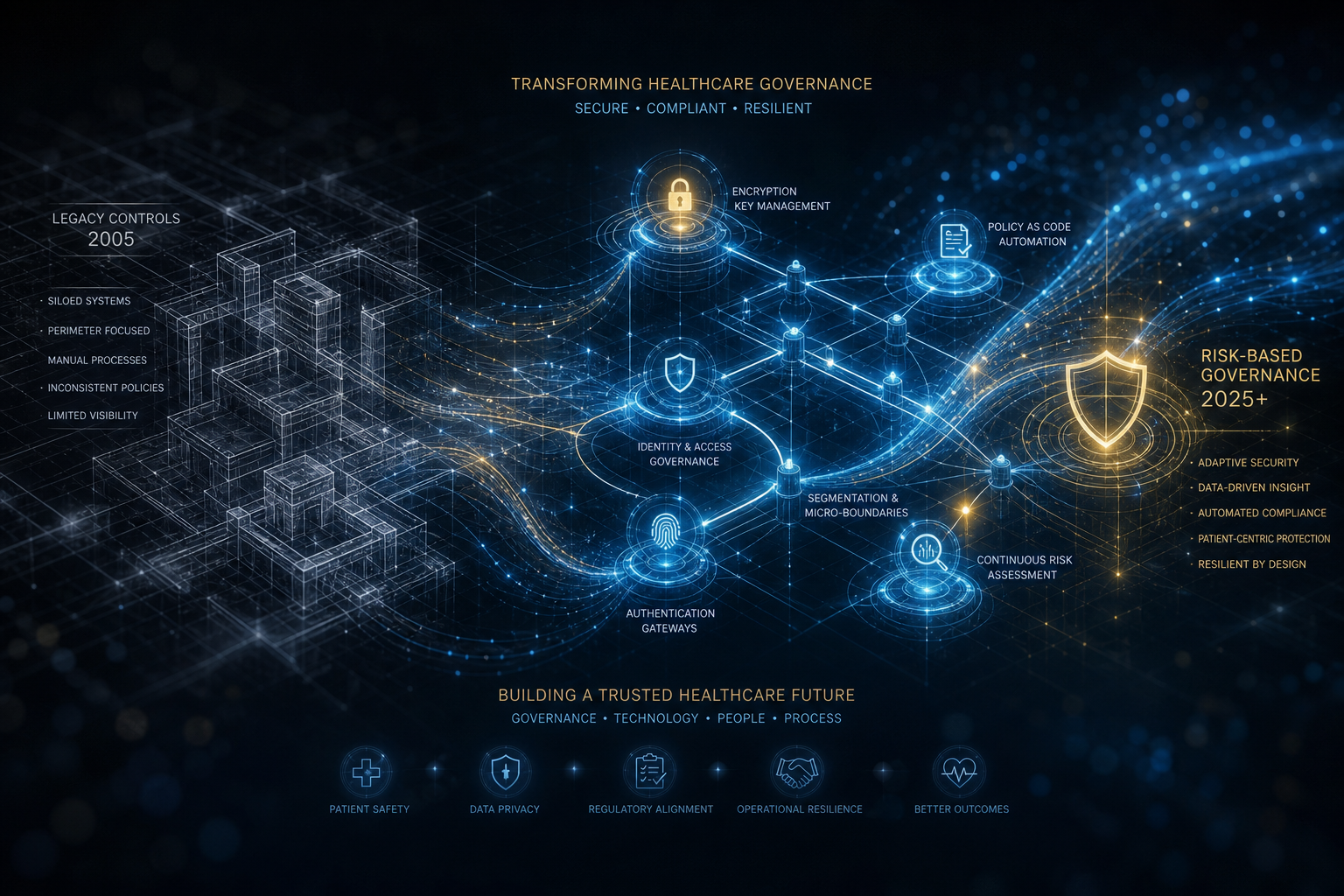
The HIPAA Security Rule, established in 2005 and implemented across two decades, has become the subject of formal modernization by the HHS Office for Civil Rights. The rule—codified in 45 CFR §§ 164.300–318—established baseline confidentiality, integrity, and availability protections for electronic protected health information (ePHI) across covered entities (healthcare providers, health plans, clearinghouses) and their business associates. However, the operational security landscape has fundamentally shifted: threat actor sophistication has escalated, healthcare delivery increasingly relies on cloud infrastructure, remote access and mobile device proliferation has expanded, and empirical breach data reveals persistent control deficiencies despite two decades of existing requirements.
In 2024–2025, HHS OCR formally initiated rulemaking to modernize the Security Rule, transitioning from prescriptive technical standards toward risk-based, outcomes-oriented requirements reflecting current threat intelligence and implementation best practices. The modernization was assigned Regulatory Identification Number (RIN) 0945-AA22 and entered formal federal rulemaking process tracked on reginfo.gov. Initial projections anticipated proposed rule publication in early 2026 with finalization by mid-2026. Extended stakeholder comment periods, complexity across a fragmented healthcare delivery ecosystem, and interagency coordination requirements have substantially extended the timeline.
As of July 2026, finalization remains in progress, with current regulatory tracking indicating anticipated proposed rule publication in late 2026 and final rule issuance in Q1 2027. HHS OCR has characterized delays as necessary to ensure comprehensive stakeholder input and regulatory precision, acknowledging that healthcare organizations require clear requirements to inform capital budgeting and technology procurement cycles. Interim guidance released through HHS.gov and reginfo.gov has provided preliminary insight into anticipated modernizations, but no definitive binding requirements have been codified.
The extended timeline creates operational ambiguity. Covered entities cannot finalize compliance investments or infrastructure modernization plans without confirmed regulatory text. Healthcare IT vendors, cloud service providers, and security solution vendors face uncertainty regarding product development prioritization and service-level agreement revisions. Business associates cannot complete contract amendments with covered entities until requirements solidify. Simultaneously, healthcare sector breach activity continues to accelerate, with HHS OCR data from 2024–2025 documenting over 725 incidents affecting 50+ million individuals—with root causes directly aligned to control domains anticipated for heightened scrutiny in modernized requirements: inadequate encryption, weak access controls, insufficient vulnerability management, and inadequate network segmentation.
Why It Matters
For Security Practitioners & SOC Teams
Healthcare organizations continue to experience breaches attributable to vulnerabilities the modernized rule will specifically address. Encryption gaps, inadequate multi-factor authentication, insufficient audit logging, and weak vendor risk management remain prevalent despite two decades of existing requirements. The proposed modernization explicitly targets these persistent gaps, signaling OCR's intention to heighten enforcement expectations and audit scrutiny. The modernized requirements will likely mandate enhanced encryption standards, advanced threat detection and incident response capabilities, expanded logging across systems and infrastructure, and enhanced vendor risk management frameworks. Security operations teams must prepare for technical control implementation spanning encryption infrastructure, network segmentation, endpoint detection and response, and audit logging enhancements.
For Security Leaders & CISOs
Modernization of HIPAA's Security Rule reflects systematic evidence of control deficiencies across the healthcare sector. Organizations found in violation of finalized Security Rule requirements face civil monetary penalties ranging from $100 to $50,000 per violation, with enforcement determinations typically spanning dozens to hundreds of violations across affected systems and patient populations. Beyond financial penalties, enforcement actions trigger mandatory breach notifications, media coverage, reputational damage, and institutional liability exposure. Healthcare organizations increasingly face compounding liability through state-level privacy law enforcement actions and civil litigation related to data protection failures. Security leaders must establish governance frameworks for organizational readiness, budget capital and operational expenditures through anticipated implementation deadlines, and position organizational security capabilities for rapid compliance achievement upon rule finalization.
For Policy, Risk & Compliance Officers
Rule modernization cascades into governance, strategic planning, and stakeholder communication requirements. Healthcare boards increasingly receive cybersecurity risk briefings as part of fiduciary duty obligations, with rule modernization combined with accelerating breach activity representing material institutional risk requiring board awareness and oversight mechanisms. Compliance and legal leadership must establish mechanisms for tracking rule finalization, interpreting regulatory language, and translating requirements into organizational policy. Organizations will require stakeholder communication strategies addressing patient privacy expectations, provider training needs, and business associate notification obligations. The compressed 12–18 month implementation window post-finalization is constrained by organizational capacity and vendor availability; organizations beginning readiness efforts now will complete preliminary assessments and planning during finalization phases, positioning them for rapid implementation execution upon rule publication.
Operational Implications
Immediate (Days to Weeks): Healthcare organizations face immediate decisions regarding interim security posture and regulatory monitoring infrastructure. Current operations must continue uninterrupted while organizations establish HIPAA modernization governance structures with cross-functional representation and accountability. Preliminary security posture assessments should identify acute compliance gaps—unencrypted ePHI storage, single-factor authentication, absent network segmentation—requiring attention independent of rule finalization. Regulatory monitoring infrastructure must be established to track Federal Register updates, reginfo.gov (RIN 0945-AA22) developments, OCR guidance releases, and industry association analysis. All systems, applications, and data repositories storing or processing ePHI must be catalogued, with data flows mapped to establish the foundation for detailed gap analysis and implementation planning.
Short-Term (Weeks to Months): Healthcare IT departments must execute comprehensive compliance gap analysis mapping current security controls to anticipated modernized rule requirements. Infrastructure modernization planning must address encryption standards (data at rest, data in transit, and encryption key management), network segmentation requirements reflecting zero-trust architecture principles, vulnerability and patch management process modifications to support accelerated remediation timelines, and multi-factor authentication implementation across user populations. Capacity planning for staffing and training must identify skill gaps in cryptography, cloud architecture, zero-trust security design, and incident response. Vendor evaluation frameworks must be developed and market analysis completed for encryption solutions, multi-factor authentication platforms, network segmentation technologies, endpoint detection and response tools, and logging infrastructure. Multi-year budget models must be created forecasting technology procurement, vendor services, staff training and development, consulting services, and internal operations costs through implementation completion. Business associate agreements with healthcare IT vendors, cloud service providers, and other service providers require systematic review to identify provisions requiring update to reflect modernized requirements.
Long-Term (Months to Years): Healthcare organizations must execute enterprise-wide deployment of modernized security controls following rule finalization. Technology procurement decisions finalized during short-term phases enable detailed implementation planning for each solution, including deployment methodology, system integration points, testing and validation protocols, and risk mitigation strategies. Staff training programs aligned with anticipated security control requirements must be executed across IT staff, security teams, clinical staff, compliance staff, and executive leadership. Pilot implementations in non-critical environments must validate control effectiveness before enterprise-wide deployment. Following full deployment of modernized security controls across all systems and applications, comprehensive compliance validation must occur to identify and remediate any remaining gaps. Incident response procedures and breach notification protocols must be revised to reflect finalized requirements and validated through tabletop exercises. Internal audit or third-party assessment must validate organizational compliance with finalized requirements, generating documentation supporting organizational assurance and regulatory defense. Continuous compliance maintenance infrastructure must be established ensuring sustained compliance through governance mechanisms, monitoring, vulnerability management, and incident response readiness protocols integrated into organizational operations.
Recommended Actions
Actions are organized by organizational security maturity. Baseline controls apply across all tiers and should be treated as immediate priorities regardless of organizational size.
* Organizations with standard security tooling and general-purpose endpoint protection.
- 1 - Establish HIPAA Modernization Governance Structure: Create cross-functional task force with representation from IT/Security, Compliance/Privacy, Legal, Finance, Clinical Operations, and Executive Leadership to coordinate organizational readiness efforts and track regulatory updates.
- 2 - Access and Review Official Regulatory Documentation: Obtain and review proposed rule language, interim guidance, and regulatory analysis through reginfo.gov (RIN 0945-AA22) and HHS.gov to establish authoritative baseline for anticipated requirements.
- 3 - Conduct Preliminary Security Posture Assessment: Execute rapid assessment of current security controls against existing HIPAA Security Rule baseline and anticipated modernized requirements, identifying acute gaps requiring immediate attention.
- 4 - Establish Regulatory Monitoring Infrastructure: Assign responsibility for ongoing monitoring of reginfo.gov, HHS.gov updates, OCR guidance releases, and industry association analysis with automated alerts for Federal Register updates.
- 5 - Identify and Catalog ePHI Repositories and Data Flows: Document all systems, applications, and data repositories storing or processing ePHI with detailed mapping of data transmission protocols and points of external connectivity.
* Organizations with dedicated security functions, SIEM coverage, and structured incident response capability.
- 1 - Develop Comprehensive Compliance Gap Analysis: Conduct detailed analysis mapping current security controls to anticipated modernized rule requirements, quantifying gaps in terms of systems affected, patient populations impacted, and remediation complexity.
- 2 - Establish Vendor Evaluation Framework: Develop evaluation criteria for security solutions addressing identified gaps including feature alignment, vendor stability, deployment complexity, integration capability, and total cost of ownership through implementation completion.
- 3 - Conduct Capacity Planning for Staffing and Training: Assess current IT, security, and compliance staffing capacity for modernization implementation, identify skill gaps, and plan staff training programs and recruitment timelines for specialized expertise.
- 4 - Develop Multi-Year Budget Models: Create detailed financial forecasts for compliance implementation including technology procurement, vendor services, staff training, consulting services, and internal operations costs through implementation completion.
- 5 - Initiate Business Associate Agreement Review Cycles: Systematically review business associate agreements to identify provisions requiring update, develop amendment templates, and establish timelines for contract updates preceding rule finalization.
* Organizations with mature security programs, threat intelligence capacity, and advanced monitoring capability.
- 1 - Execute Technology Procurement and Implementation Planning: Finalize procurement decisions for security solutions, develop detailed implementation plans with deployment methodology and integration points, and create interdependency maps for coordinated implementation.
- 2 - Deploy Staff Training and Capability Development Programs: Execute role-specific training programs for IT staff, security teams, clinical staff, compliance staff, and executive leadership aligned with anticipated security control requirements.
- 3 - Conduct Pilot Implementations in Non-Critical Environments: Implement security controls in test environments to validate control effectiveness, test system integration, and identify operational workflow impacts before enterprise-wide deployment.
- 4 - Establish Continuous Regulatory Monitoring and Interpretation Systems: Develop processes for ongoing tracking of rule finalization and OCR guidance with mechanisms for rapidly translating regulatory language into organizational policy updates.
- 5 - Develop Organizational Readiness Assessment Metrics and Governance Oversight: Establish key performance indicators tracking implementation progress, technology deployment status, compliance gap remediation, and staff training completion integrated into board-level risk reporting.
Closing Statement
The HIPAA Security Rule modernization represents an organizational imperative distinct from discretionary security enhancement initiatives. The extended timeline to rule finalization—while creating near-term planning uncertainty—provides a critical window for healthcare organizations to conduct systematic readiness assessment, begin infrastructure modernization planning, and establish governance frameworks for implementation execution. Organizations that treat this period as a strategic planning opportunity, rather than waiting for finalized requirements to trigger reactive responses, will minimize implementation risk, achieve faster compliance cycles, and position themselves competitively within their healthcare markets.
The healthcare sector's persistent vulnerability to data breaches—with encryption gaps, weak access controls, and insufficient vendor risk management remaining prevalent causes of institutional compromise—establishes the regulatory foundation for modernization requirements. Organizations should anticipate that finalized requirements will reflect current threat intelligence and operational best practices. Proactive implementation of security enhancements aligned with anticipated requirements demonstrates institutional commitment to data protection and positions organizations favorably for rapid finalized-rule compliance. The compressed implementation window following rule finalization will be constrained by organizational capacity, vendor availability, and sequencing of interdependent control implementations. Beginning readiness efforts now—before finalization announcements accelerate decision-making timelines—establishes institutional resilience and governance maturity essential to healthcare security sustainability.